Why optimizing articles for AI Overviews matters right now
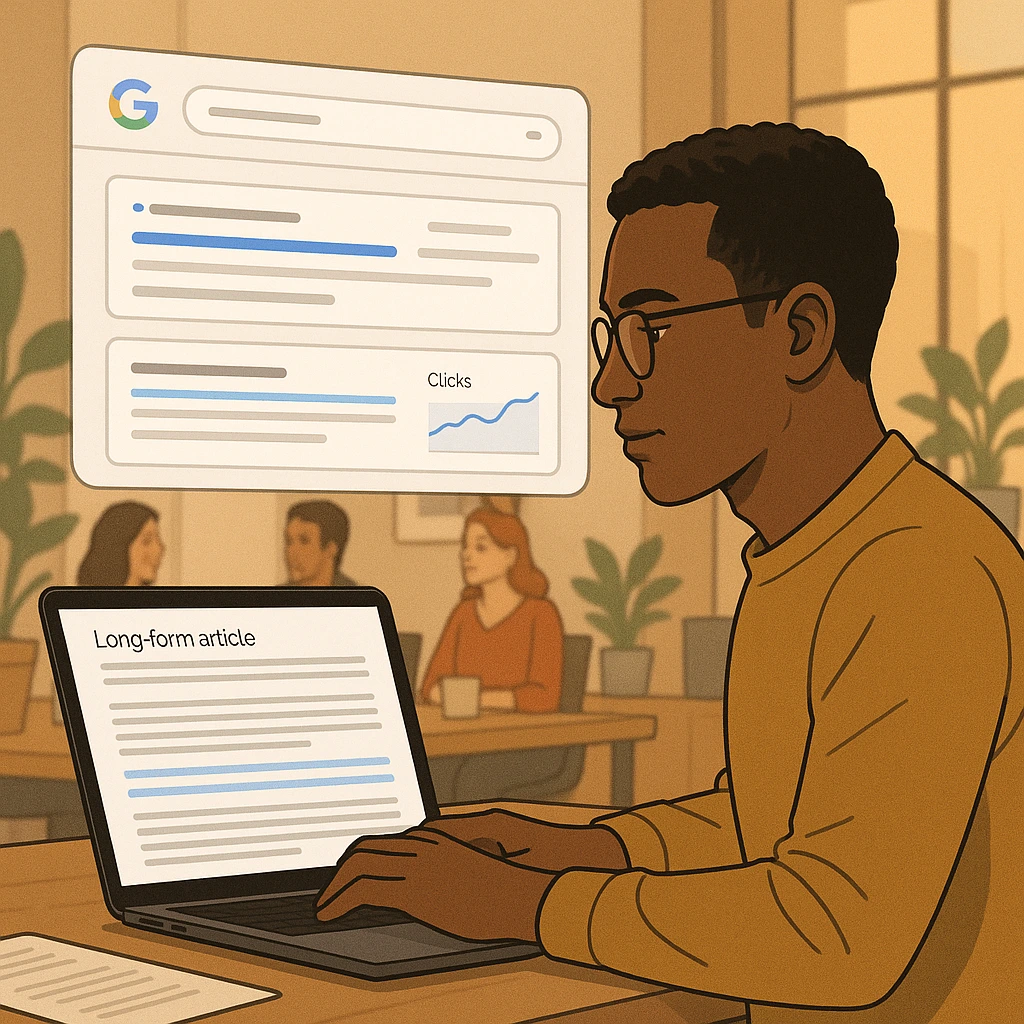
Search results no longer stop at ten blue links, they now open with AI generated summaries that attempt to answer the query in a single sweep, called AI Overviews in Google Search. By mid 2025 those AI Overviews appeared in roughly thirty percent of searches, and in nearly three quarters of problem solving queries, according to a study covered by Search Engine Journal.[4] At the same time BrightEdge reported that overall search impressions climbed by almost fifty percent after AI Overviews launched, yet click throughs to websites fell by close to thirty percent.[6]
For writers and editors this shift creates a paradox, your content can be more visible inside AI summaries while drawing fewer clicks to the site that pays your bills. Google’s own documentation tells publishers that there is no magic tag for inclusion, instead the guidance is to focus on helpful, reliable, people first content, while using structure and schema so AI features can understand pages better.[1][2] This tutorial walks through a practical way to optimize existing and future articles for AI Overviews before the year ends, so you can protect traffic, win citations and keep your content strategy resilient in the AI search era.
Understanding how AI Overviews see your articles
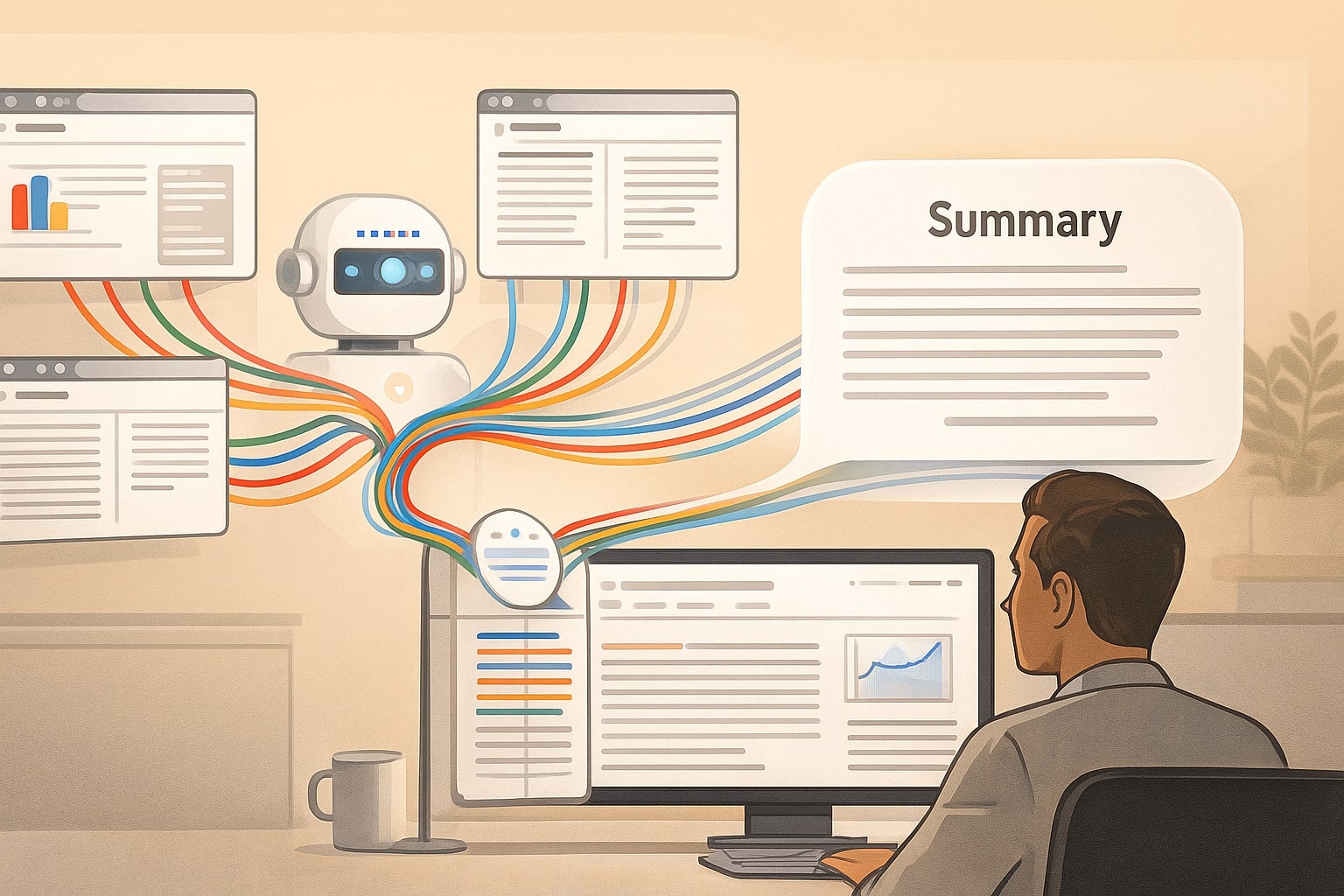
Before you change a single heading, it helps to understand what AI Overviews are designed to do and what they are not. In May 2024 Google announced that AI Overviews would roll out to hundreds of millions of users in the United States, with a target of over one billion people globally by the end of that year.[3] These summaries pull information from multiple pages, generate a narrative answer, then cite a handful of sources below the text.
Later research showed that AI Overviews are most common on mid volume, question style searches that require synthesis rather than a single fact, for example how to start a newsletter business, not weather in Jakarta.[4][5] That aligns with BrightEdge findings that complex informational queries grew strongly in AI Overview coverage while listicle style ranking content and pure comparison keywords declined.[6] In other words, Google tends to reserve AI Overviews for tasks where a synthesized explanation is useful.
There is another important trend, overlap between AI Overview citations and the traditional organic top results has been rising. BrightEdge reported that by late 2025 more than half of the links cited in AI Overviews also ranked organically, with overlap above seventy percent in health and education topics.[7] That means the fundamentals of good SEO still matter, you are not optimizing for a separate universe, you are optimizing for a stricter layer that sits on top of regular ranking systems.
Core principles for AI Overviews without sacrificing humans
Start from intent rather than clever keywords
AI Overviews are triggered most often by problem solving and question based searches, so articles that match clear intent have an advantage. Research from SE Ranking and other platforms shows that question style queries and conversational phrasing became more common as users experimented with generative search.[5] Instead of chasing a long checklist of synonyms, identify the core job the reader is trying to get done, for example fix a configuration error, choose between three pricing models or plan a campaign timeline.
Turn that job into a natural language query, which becomes your main keyword and the anchor for your title, H1 and early paragraphs. Supporting sections can then target sub questions, like whether the tactic is safe, how long it takes or what it costs. This approach aligns with Google’s guidance to create content that serves a primary purpose in depth, instead of stitching together loosely related topics for the sake of volume.[2]
Structure every section as a clear answer
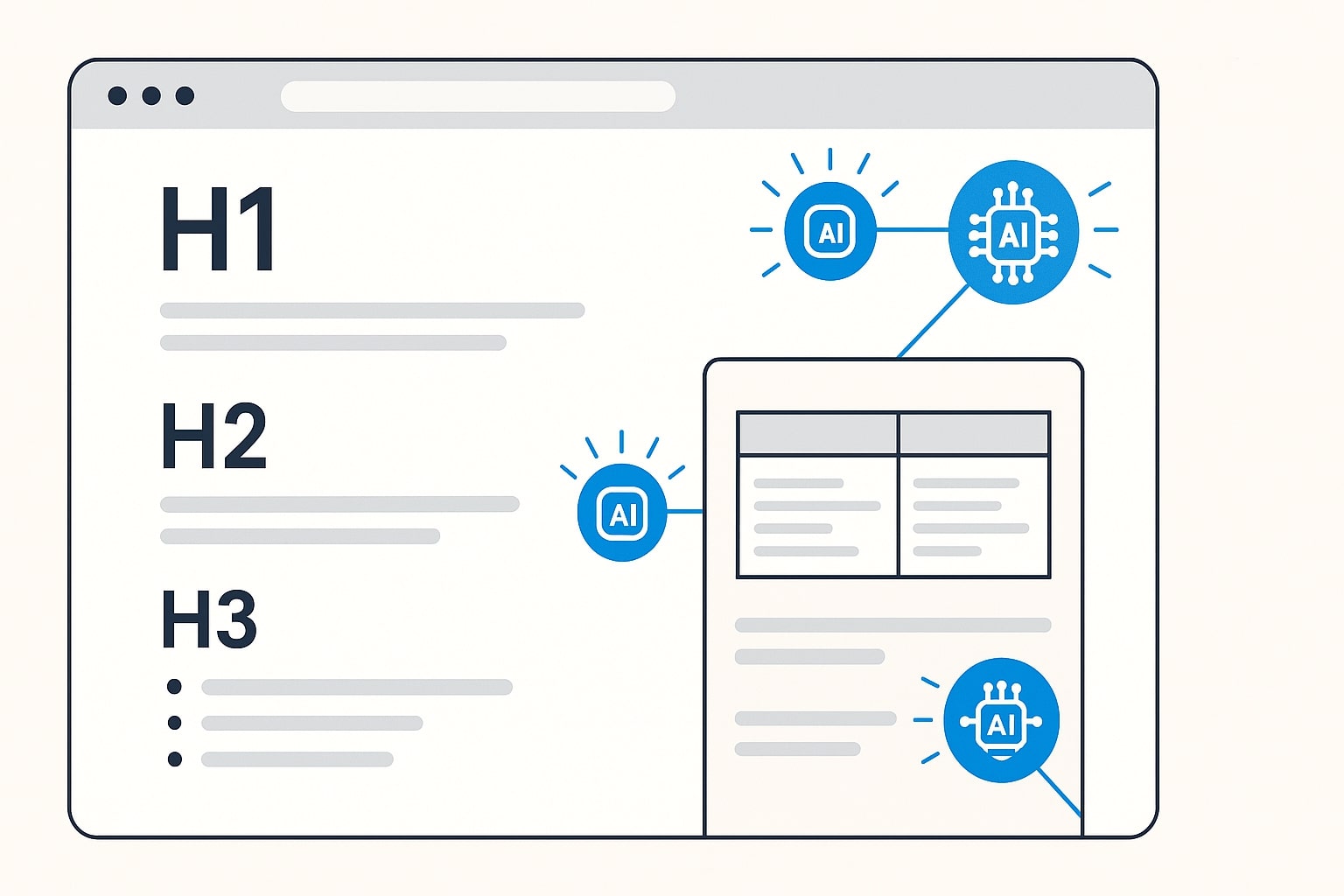
Inside AI Overviews, Google looks for snippets that can answer a narrow part of the query in just a few lines. That is easier when your article uses headings and short paragraphs that mirror the way a user thinks. For each H2, define the question it answers, then open the section with two or three sentences that give a direct, reader friendly response. The rest of the section can expand with examples, context and caveats.
This pattern reduces the need for AI systems to guess which parts of your page matter, since you are already packaging answers in obvious locations. It also makes the article more useful for humans who scan on mobile, which is crucial because more than eighty percent of AI Overview queries happen on phones.[11]
Check out this fascinating article: How Gemini 3 Will Change SEO, AI Overviews, and Content Strategy on Google
Make E-E-A-T visible inside the copy
Google’s documentation for both Search and AI features emphasizes helpful, reliable, people first content and asks publishers to show clear evidence of expertise, experience and trust.[1][10] For AI Overviews, this matters twice, first when the underlying ranking systems decide whether your page deserves visibility, and again when the summarization system picks which sources to quote.
You can support E-E-A-T signals inside the article by referencing real data and original research, explaining how you ran an experiment, describing the constraints you faced and crediting any tools or frameworks used. When relevant, include a small author bio with credentials and link to a profile page that lists your work. These touches do not guarantee inclusion, but studies of AI Overviews show that high authority domains with clear topical focus tend to win more citations.[4][18]
On page structure that helps AI Overviews understand your article
Craft titles and H1s that match AI era queries
Your title still needs to catch human attention on social feeds and email subject lines, yet it also has to match the way people phrase queries when they expect AI style answers. Research from BrightEdge and other providers indicates that ranking style headlines, like twenty best tools for a task, are less likely to trigger AI Overviews than how to, why and problem solving queries.[6]
A practical approach is to keep the H1 close to a natural query, while letting the meta title carry extra nuance for search results. For example, the H1 can focus on how to optimize articles for AI Overviews, while the SEO title adds urgency and context for the year end timeline. This keeps signals clear for search systems while preserving flexibility for social snippets and on site modules.
Use H2 and H3 headings as a map of sub questions
Every AI Overview is essentially a stitched together set of answers to sub questions. When your article already reflects that structure, with H2s mapped to main angles and H3s covering specific scenarios, AI systems can match relevant passages more easily. Think of headings as semantic labels rather than decorative phrases, they should describe exactly what the reader will learn in the next few paragraphs.
For example, a section about data quality should not be titled more ideas, but something like how to fact check AI generated drafts or how to cite studies for AI Overview credibility. This echoes Google’s advice to create content that is easy to understand by both users and automated systems through clear headings and well organized sections.[8]
Place concise answer blocks near the top
After the opening hook, include a short answer block that directly responds to the main query. This is similar to featured snippet optimization, but tailored for multi source summaries. Aim for two to four sentences that explain what AI Overviews are looking for in your context, such as people first content, structured answers and credible sources.
Make sure this block is fact checked and up to date because it is the part most likely to influence both AI and human impressions. You can also follow it with a brief list of key steps, which AI systems can transform into structured instructions while readers get an overview before committing to the full tutorial.
Use lists, tables and examples for fast parsing
AI models and humans both benefit from structured formats that express relationships clearly. Lists are useful for step sequences, while tables shine when comparing options or summarizing trade offs. In fact, research into AI result pages suggests that comparison queries have become less dominant in AI Overviews, which makes concise tables inside your own article even more valuable for readers who want to dig deeper.[6]
Real examples anchor the advice in lived experience. For each abstract principle, add a small case, such as how a specific article changed after AI Overview rollout, or how click through rates shifted when you rewrote headings to match intent. When you do not have first party data, you can still reference credible industry studies and link directly to them.
Technical SEO moves that support AI Overview visibility
Use schema as a context booster rather than a cheat code
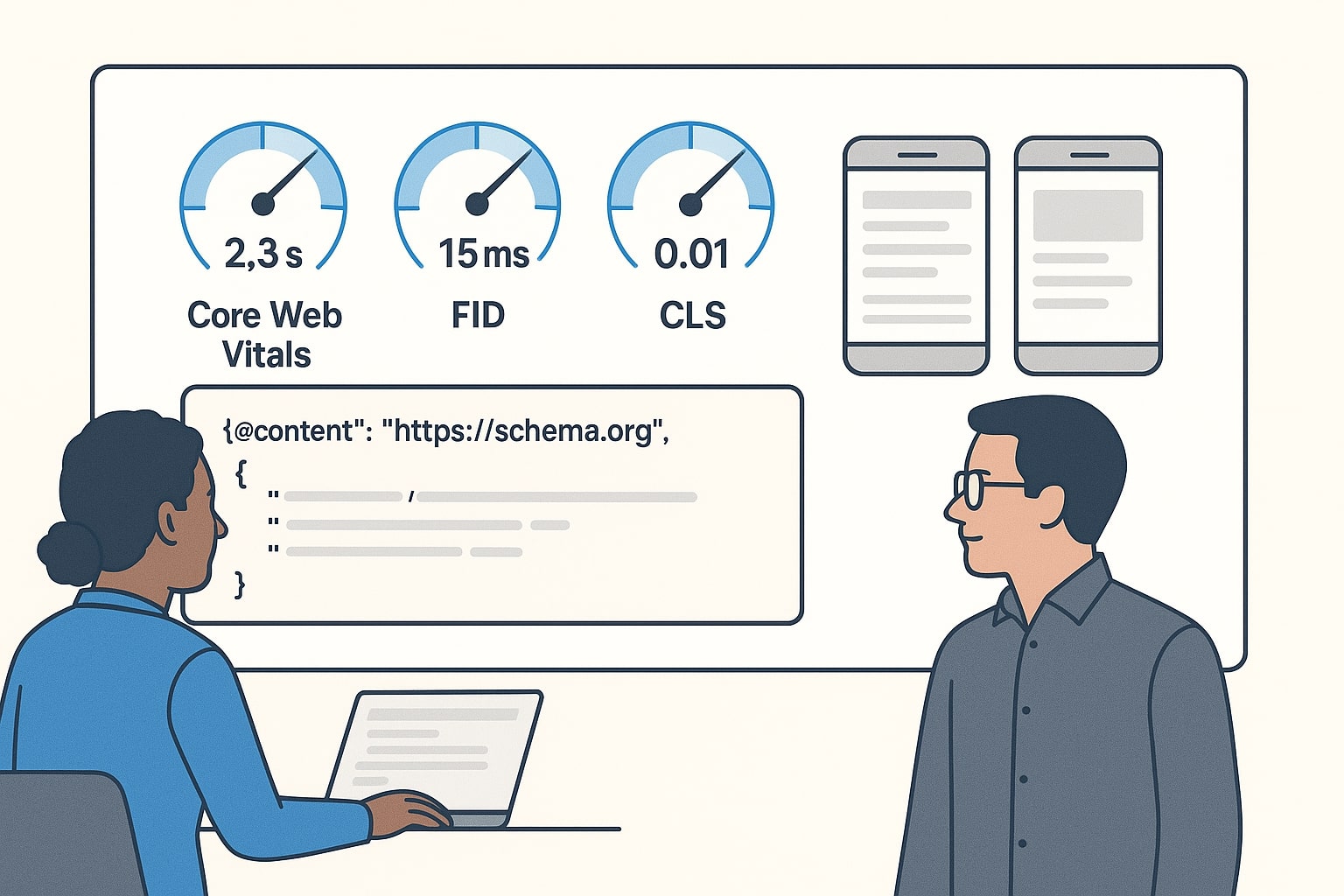
Google explicitly states that there is no special markup that guarantees AI Overview inclusion.[8] That said, appropriate schema still gives machines more context about what your page represents. For long form educational content, Article or BlogPosting types are usually a good baseline, with FAQ markup added when you include distinct questions and answers that comply with guidelines.
If your article relates to products, events, medical topics or reviews, use the dedicated schema types so that Google can align your content with knowledge graph entities. Remember that schema should reflect reality, do not mark up a normal paragraph list as a FAQ just to chase rich results, since that conflicts with the people first guidance and can erode trust over time.[2]
Strengthen internal links and topic clusters
AI Overviews often cite pages that sit within a clear topical cluster, because those clusters signal depth, authority and ongoing maintenance. Internally link related guides, case studies and glossary entries so Google can see the broader context behind any single article.
This strategy also protects you against volatility, especially since BrightEdge observed swings in AI Overview coverage, with some categories dropping in frequency after Google dialed the feature back in late 2025.[13] If one article temporarily loses citation visibility, related pieces can still capture traffic or be cited instead.
Keep performance and mobile experience in excellent shape
Most AI Overview impressions and interactions happen on mobile devices,[11] which means your layout, font sizes, tables and code samples must be easy to read on smaller screens. Slow or jittery pages are more likely to frustrate users who arrive from AI Overviews, already conditioned to quick answers.
Monitor Core Web Vitals, especially LCP and CLS, and trim heavy scripts or third party widgets that do not contribute meaningfully to the page. Even if performance is not a direct ranking factor in AI Overviews, it is part of the broader systems that decide whether your article deserves exposure at all.
Content refresh playbook for the AI Overview era
Identify existing articles with AI Overview potential
Start with your analytics and Search Console data. Look for articles that already rank on page one for question style queries, or that receive impressions for terms where AI Overviews frequently appear, such as tutorials, comparisons or troubleshooting guides.[22]
Next, manually test a sample of these queries in Google. Note where AI Overviews appear, whether your site is cited and which competitors are referenced. Add this information to a tracking sheet so you can see patterns by topic, query type and user intent.
Rewrite sections for clarity, questions and evidence
When refreshing an article, move away from vague headings and dense paragraphs. Convert generic sections into explicit questions, update the answer blocks near the top and add current data points from reputable sources. Cite major industry studies, original research and, where appropriate, Google’s own documentation.[1][8]
If you rely on AI models to generate draft text, follow Google’s guidance to treat them as tools rather than authors, and clearly explain how automation was used when readers might reasonably expect disclosure.[10] Then layer human judgment, editing and fact checking on top. This combination can speed up production while maintaining trust.
Check out this fascinating article: Google AI Mode Explained: How It Works, What Changes for SEO, and How to Show Up
Add new examples, visuals and risk sections
AI Overviews sometimes omit nuance or underestimate risks, as highlighted by independent evaluations of AI generated answers in sensitive areas like insurance and health.[21] You can turn that weakness into a strength by emphasizing real world constraints and consequences in your article.
Add sections that explore edge cases, common mistakes and red flags. Use tables or call outs to show what might go wrong if advice is taken out of context. Include simple diagrams or screenshots when helpful. These additions make your content more attractive for readers who click through after scanning an AI Overview, because they find depth that the summary cannot fully capture.
How AI Overviews interact with ads and promotion
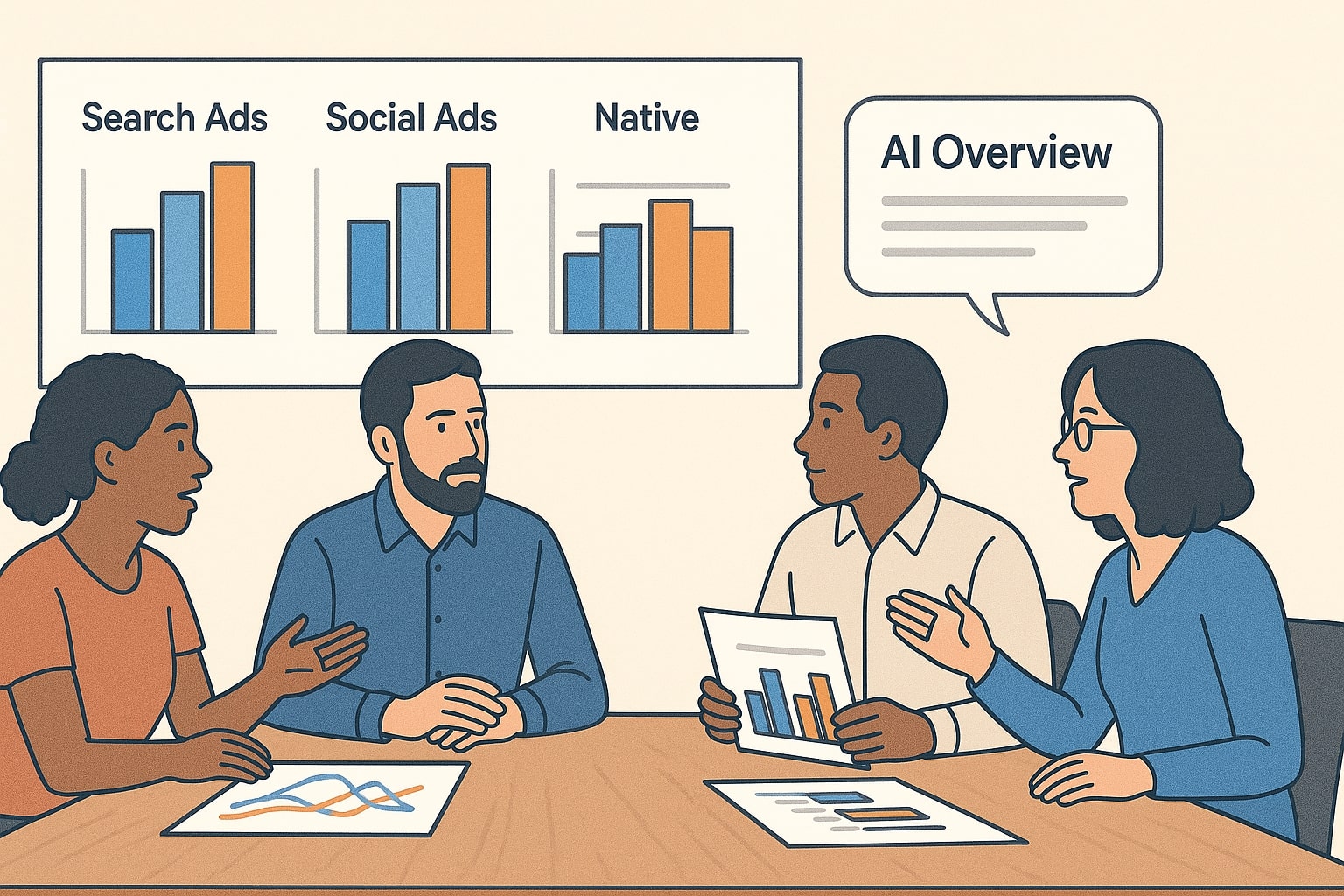
Comparing ad channels when promoting AI Overview ready articles
Google explains that ads can appear above, below and sometimes inside AI Overviews, depending on the query and auction, but AI Overviews themselves are not ads.[9] For publishers, that means paid campaigns still matter when launching or refreshing strategic articles. The question is how different channels support content that is designed for AI citations.
Below is a practical comparison you can use when planning campaigns that drive readers into AI optimized guides.
| Channel | Primary goal | Strengths for AI optimized content | Weaknesses in AI search context | Best use case near year end |
|---|---|---|---|---|
| Search ads | Capture existing intent on keywords | Align tightly with problem solving queries you also target in content, easy to test titles and messaging quickly | Lower paid CTR reported for queries with AI Overviews present, competition can be intense in some verticals[12] | Launch or relaunch key tutorials where you already rank but want to defend visibility |
| Social ads | Reach new audiences by interest | Great for storytelling around your expertise, can highlight benefits of deep guides beyond AI summaries | Less connected to search intent, may drive colder traffic that bounces faster | Promote pillar pieces and playbooks to build brand and retargetable audiences |
| Native or content discovery ads | Place articles in reading contexts | Users arrive primed to consume long form content, good for evergreen guides that complement AI Overviews | Networks vary in quality, and results can be harder to attribute clearly | Scale high value guides to niche audiences who care about depth and nuance |
As AI search features expand, think of ads as a way to seed behavior and awareness around your best content, rather than a direct lever for AI Overview inclusion. Ads can get the right people into your article, but it is the content itself that convinces Google to cite you.
Step by step checklist to optimize one article before the year ends
Step one, choose the right candidate article
Pick a piece that already has some traction, perhaps a tutorial, comparison or explainer that ranks on the first two pages for relevant queries. Confirm that AI Overviews appear for at least a subset of those queries and check whether your page is currently cited. Add those findings to your tracking sheet.
Clarify the primary intent, is the searcher trying to learn, evaluate options, troubleshoot an error or plan a process. This decision will guide your restructuring, examples and calls to action.
Step two, reshape the structure and answer blocks
Rewrite the introduction so it includes the main keyword and a concrete data point about AI Overviews, while explaining why the topic matters now. Add a short answer block right after the hook that summarises how to optimize articles for AI Overviews in two to four sentences.
Then, audit every heading. Turn vague labels into explicit questions and ensure each H2 corresponds to a meaningful sub topic that AI Overviews might need to address. Within each section, front load the direct answer and follow with details, examples, data and risks.
Step three, strengthen E-E-A-T and references
Add citations to authoritative sources that support your claims about AI Overviews, search behavior, click through impacts and user trends. This can include Google’s own documents, major SEO research reports and studies by analytics companies.[1][3][6][12] Make sure your references are recent, especially given how quickly AI features evolve.
Where relevant, include a short author bio box or link to a profile page that lists your experience, especially if you have worked directly on search, analytics or content strategy. Readers and machines alike use these signals to decide whether to trust your guidance.
Step four, tighten technical and schema implementation
Validate that your article uses appropriate schema, such as Article and FAQ, and run the page through Google’s testing tools to catch errors.[8] Check mobile usability, Core Web Vitals and indexability. Small technical issues might not block AI Overview inclusion entirely but can hinder overall performance, which in turn influences how useful Google considers your page.
Also review internal links, adding connections from related guides and cluster pages. This strengthens your topic authority and increases the chance that if one article is not cited, another from your site might appear.
Step five, promote, monitor and refresh
Once updated, promote the article across email, social and paid channels as appropriate for your audience. Use analytics tags to track campaign driven traffic separately from organic and AI Overview related visits.
Monitor impressions, click through rates and engagement metrics. Although Google Search Console does not provide a dedicated AI Overview filter, experiments by practitioners have shown ways to infer some patterns by watching specific queries over time.[22] Capture screenshots when your article is cited and note any changes after further updates.
Plan to revisit this article on a regular schedule, especially when Google ships major AI Search changes. The goal is to keep it aligned with evolving user behavior and platform capabilities, not to treat optimization as a one time project.
Download the AI Overview optimization playbook (free sheet)
To make these steps easier to apply, you can use a ready made checklist that mirrors the process in this tutorial. The sheet is structured for Google Sheets or Excel and covers research, content planning, drafting, on page SEO, technical checks and promotion.
👉 Download the template:
Download the AI Overview article checklist
Inside the file you will find columns for category, checklist item, description, status, owner and deadline. Duplicate the tab for each priority article, assign owners and use it as a lightweight playbook for your end of year optimization sprint.

Turning AI Overviews into a content advantage, not a threat
AI Overviews and AI search modes are reshaping how people discover and evaluate information, often reducing click through rates even as total impressions rise.[6][12] Writers and editors cannot switch these features off, but they can decide how to respond. The opportunity lies in building articles that are both easy for AI systems to understand and genuinely valuable for the humans who choose to click through.
By aligning around clear intent, using question led structure, strengthening E-E-A-T, adding real data and keeping your technical foundation healthy, you increase the odds that your work will be cited, trusted and remembered. You also build a library of content that can weather algorithm shifts more gracefully, because it is grounded in reader needs rather than tricks.
If you have already seen AI Overviews appear for your niche, or if you are testing new approaches on your own site, I would love to hear what you are seeing. Share your experiments, questions or challenges in the comments so we can compare notes and refine this playbook together.
References
References
- Google Search Central — AI features and your website ↩
- Google Search Central — Creating helpful, reliable, people-first content ↩
- Google — Generative AI in Search, Let Google do the searching for you ↩
- Search Engine Journal — Google AI Overviews Found In 74 Percent Of Problem Solving Queries ↩
- SE Ranking — Google AI Overviews 2024 Recap and Research ↩
- BrightEdge — One Year Into Google AI Overviews, Data Reveals Google Search Usage Increases by 49 Percent ↩
- BrightEdge — Rank Overlap Between AI Overviews and Organic Results After 16 Months ↩
- Google Search Central — AI features and your website, technical guidance ↩
- Google Ads Help — About ads and AI Overviews ↩
- Marvlus — Google AI Content Guidelines Summary, Practical SEO and Compliance ↩
- WordStream — AI Overviews Statistics and Facts ↩
- Seer Interactive — AIO Impact on Google CTR, September 2025 Update ↩
- W3era — Google AI Overviews Shape Research, But Search Still Wins Sales ↩
- Newzdash — Analysis of AI Overview Visibility in Google Search ↩
- Kiplinger — Study Finds Google AI Overview Is Often Wrong About Life Insurance ↩
- Brodie Clark — AI Overview Tracking in Google Search Console ↩
Ready to apply this to your business?
Let's Talk Strategy →