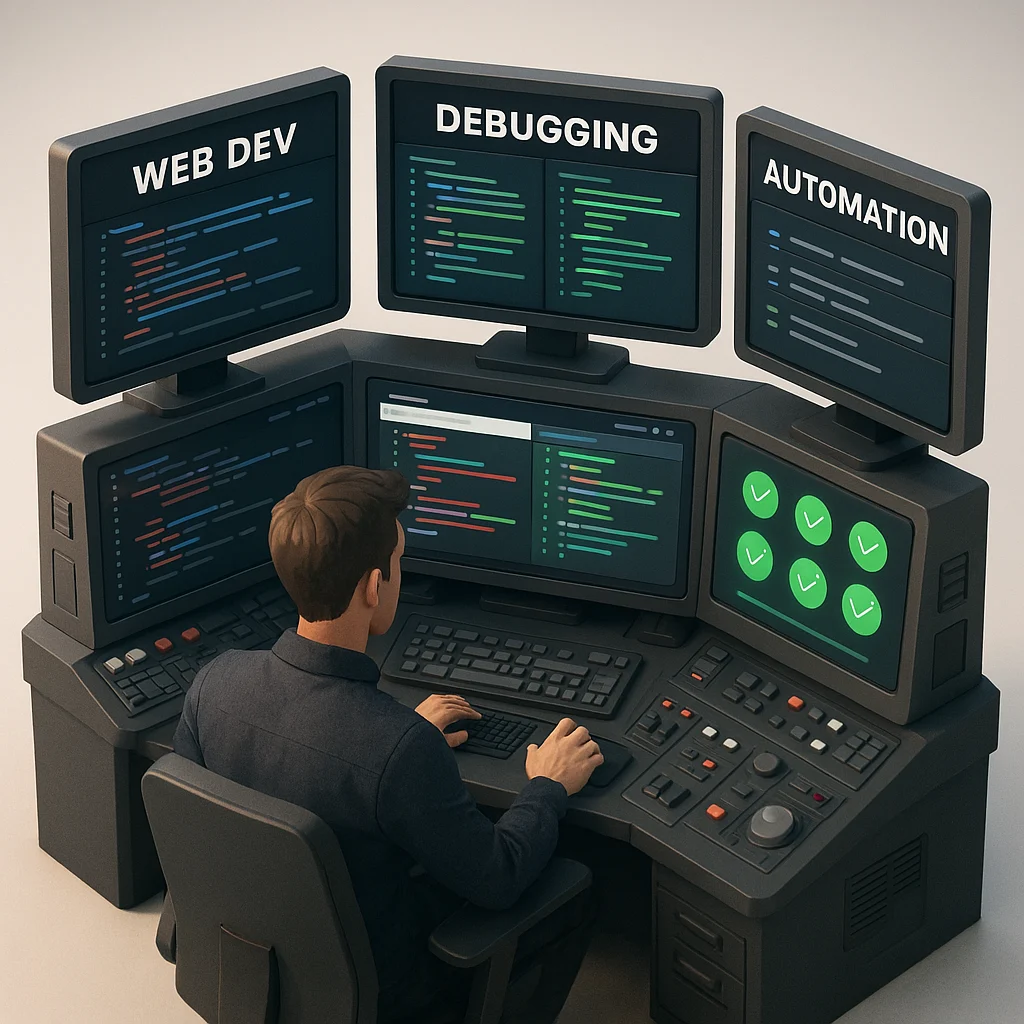
Margabagus.com – A pager goes off at 02:17. A backend job stalls, frontend metrics dip, and the on‑call thread fills with screenshots. In moments like this, the difference between panic and poise is a repeatable playbook—down to the exact words you feed your coding assistant. In 2025 most developers are already using AI in some form, but trust lags unless we demand tests, diffs, and rollback notes in every response. According to the 2025 Stack Overflow Developer Survey, 84% of respondents are using or planning to use AI tools; according to Stanford’s AI Index 2025, organizational AI use jumped to 78% in 2024; and industry field reports show adoption is high even as reliability and governance remain the real bottlenecks. This article turns those realities into practical prompts and small, verifiable code patterns you can ship today.
Web Development Prompts that Ship Features Fast
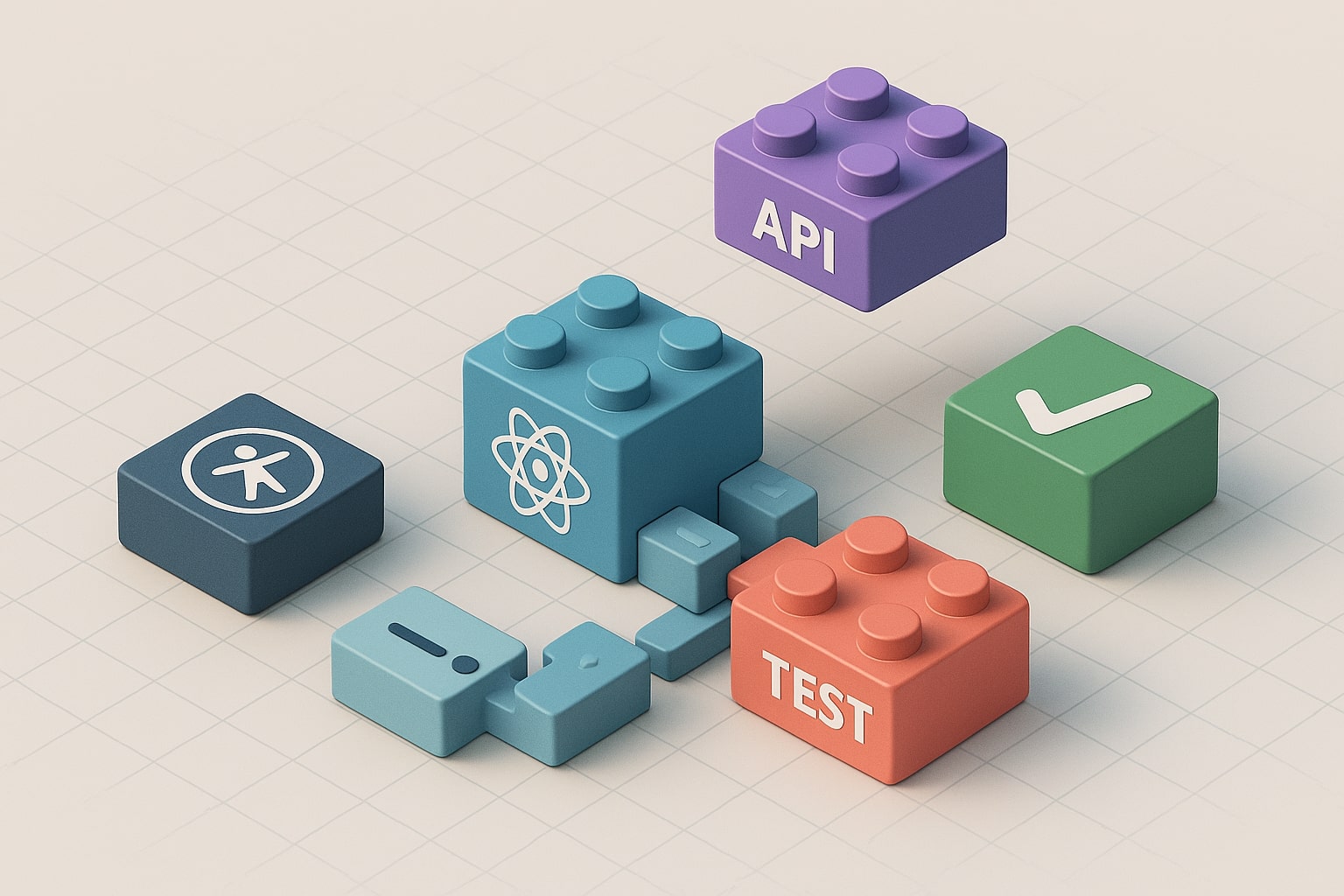
Great web development prompts do three things: set a narrow scope, specify quality gates (tests, accessibility, performance), and request diff‑only outputs so reviews stay clean. I use prompts that explicitly pin framework versions, state management choices, and budgets (KB, ms). Adoption is rising across the industry, yet teams that thrive are the ones pairing generation with reviewable artifacts.
Prompt — Feature scaffold (Next.js 14 App Router, TypeScript)
Act as a senior web engineer. Create a feature
ProfileBadgesthat fetches from/api/badges(JSON array). Requirements: Server Components by default; client component only for interactivity; accessible<ul>rendering with keyboard focus; skeleton + error boundary; suspense. Include Vitest unit tests. Performance budget: bundle increase ≤10KB. Deliverables: (1) file/folder tree, (2) code as git diffs only, (3) tests, (4) a11y checklist, (5) edge‑case notes.
Example — Minimal client component (TSX)
'use client';
import { useEffect, useState } from 'react';

type Badge = { id: string; label: string };
export default function ProfileBadgesClient() {
  const [badges, setBadges] = useState<Badge[]>([]);
  const [error, setError] = useState<string | null>(null);

  useEffect(() => {
    const c = new AbortController();
    fetch('/api/badges', { signal: c.signal })
      .then(r => r.ok ? r.json() : Promise.reject(r.statusText))
      .then(setBadges)
      .catch(e => setError(String(e)));
    return () => c.abort();
  }, []);

  if (error) return <p role="alert">Failed to load badges: {error}</p>;
  if (!badges.length) return <p aria-busy="true">Loading…</p>;

  return (
    <ul aria-label="Profile badges">
      {badges.map(b => (
        <li key={b.id}><span>{b.label}</span></li>
      ))}
    </ul>
  );
}
Check out this fascinating article: 10 Best Prompt Engineering Tools for 2025: Save 15+ Hours Weekly
Prompt — API contract & error handling
Given this OpenAPI snippet [paste], generate a typed fetch wrapper with timeouts, exponential backoff, and HTTP 429/5xx handling. Provide unit tests that simulate retries. Output: git diffs + test plan + notes on timeouts per environment.
Example — Typed fetch with retry (TS)
export async function get<T>(url: string, { attempts = 3, timeoutMs = 5000 } = {}): Promise<T> {
  for (let i = 0; i < attempts; i++) {
    const ctrl = new AbortController();
    const t = setTimeout(() => ctrl.abort(), timeoutMs);
    try {
      const res = await fetch(url, { signal: ctrl.signal });
      if (res.status === 429 || res.status >= 500) throw new Error(String(res.status));
      if (!res.ok) throw new Error(await res.text());
      return (await res.json()) as T;
    } catch (e) {
      if (i === attempts - 1) throw e;
      await new Promise(r => setTimeout(r, 2 ** i * 200));
    } finally { clearTimeout(t); }
  }
  throw new Error('Unreachable');
}
Additional Stack Variations (Laravel, Django, Go)
Prompt — Laravel (API & validation)
You are a Laravel 11 lead. Scaffold a controller
BadgeController@indexreturning JSON from EloquentBadge. Add request validation, pagination, and HTTP caching headers (ETag/Last-Modified). Provide route definition and Pest tests. Output: git diffs only + rollback notes.
Example — routes/api.php (excerpt)
Route::get('/badges', [BadgeController::class, 'index']);
Example — app/Http/Controllers/BadgeController.php (excerpt)
public function index(Request $request) {
    $perPage = min((int)$request->query('per_page', 20), 100);
    $badges = Badge::query()->latest('updated_at')->paginate($perPage);
    $etag = sha1($badges->toJson());
    return response()->json($badges)
        ->header('ETag', $etag)
        ->header('Last-Modified', optional($badges->first())->updated_at?->toRfc7231String());
}
Prompt — Django (DRF)
As a Django REST Framework maintainer, expose
/api/badges/with pagination, schema viadrf-spectacular, and throttle classes. Provide pytest tests and acurlsmoke test. Output: diffs + migration file.
Example — serializers.py (excerpt)
class BadgeSerializer(serializers.ModelSerializer):
    class Meta:
        model = Badge
        fields = ["id", "label", "updated_at"]
Prompt — Go (net/http)
Build a tiny read-only service exposing
GET /badgeswith context timeouts, structured logs, and graceful shutdown. Include aMakefiletarget and a benchmark.
Example — main.go (excerpt)
http.HandleFunc("/badges", func(w http.ResponseWriter, r *http.Request) {
    ctx, cancel := context.WithTimeout(r.Context(), 2*time.Second)
    defer cancel()
    _ = ctx // use for db calls
    w.Header().Set("Content-Type", "application/json")
    w.Write([]byte(`[{"id":"1","label":"Pro"}]`))
})
Debugging Prompts that Drive Root‑Cause Analysis

Patching is easy; explanations are hard. Good debugging prompts force a minimal reproducible example (MRE), hypothesis ranking, and a failing test before the fix. Teams that adopt this sequence report higher acceptance and less “phantom fixes.”
Prompt — Minimal reproducible example
I will paste a failing snippet and stack trace. Produce: (1) a minimal repro (strip unrelated code), (2) hypotheses ranked by likelihood with a single root‑cause narrative, (3) one targeted fix, (4) a failing test that passes after the patch, (5) final git diff + commit message with rollback notes.
Example — Jest test that captures the bug
import { parse } from './date';

test('parses ISO string without mutating timezone', () => {
  // Bug: library assumed local TZ. This test locks expected behavior.
  const iso = '2025-08-17T00:00:00Z';
  expect(parse(iso).toISOString()).toBe(iso);
});
Prompt — Log triage like an SRE
From these logs [paste], reconstruct a timeline grouped by correlation ID. Identify the first causal error (not merely the first seen). Recommend one observability improvement (metric or structured log field) and provide an example query.
Prompt — Frontend hydration mismatch
Given this Next.js hydration warning [paste], classify the mismatch (time‑dependent render, random ID, locale). Provide a deterministic render strategy and a test that verifies equality of server vs client markup.
Check out this fascinating article: Prompt Engineering for Code Generation: Examples & Best Practices
Automation Prompts for CI/CD and DevOps

Automation prompts work best when they yield runnable, reviewable configs: GitHub Actions, GitLab CI, Terraform, Dockerfiles. Ask for idempotent scripts, dry‑run modes, and manual approvals for production. Reliability, not raw speed, is what sticks.
Prompt — Safe GitHub Actions pipeline
Create a GitHub Actions workflow for a Next.js app: build, test, lint, OWASP dependency scan, and preview deploy. Requirements: Node 20/22 matrix; concurrency cancel‑in‑progress; explicit cache; manual approval for production. Output: single YAML + rationale + rollback checklist.
Example — actions/workflows/ci.yml (excerpt)
name: ci
on:
  push:
    branches: [ main ]
  pull_request:
jobs:
  build_test:
    runs-on: ubuntu-latest
    strategy:
      matrix:
        node: [20, 22]
    steps:
      - uses: actions/checkout@v4
      - uses: actions/setup-node@v4
        with: { node-version: ${{ matrix.node }}, cache: 'npm' }
      - run: npm ci
      - run: npm run lint && npm test -- --ci
  security_scan:
    needs: build_test
    runs-on: ubuntu-latest
    steps:
      - uses: actions/checkout@v4
      - run: npx owasp-dep-scan --format sarif --out scan.sarif || true
  deploy_prod:
    if: github.ref == 'refs/heads/main' && github.event_name == 'workflow_dispatch'
    runs-on: ubuntu-latest
    environment:
      name: production
      url: ${{ steps.deploy.outputs.url }}
    steps:
      - name: Manual approval
        uses: trstringer/manual-approval@v1
      - name: Deploy
        id: deploy
        run: echo "Deploying…" # replace with real command
Prompt — Dockerfile hardening
Given this Dockerfile [paste], produce a multi‑stage build with a non‑root user, distroless final image, pinned versions, and healthcheck. Add Trivy scan instructions. Output: diff + image size estimate.
Example — Dockerfile (excerpt)
# build stage
FROM node:22-alpine AS build
WORKDIR /app
COPY package*.json ./
RUN npm ci
COPY . .
RUN npm run build

# runtime stage (distroless)
FROM gcr.io/distroless/nodejs22
USER nonroot
WORKDIR /app
COPY --from=build /app/.next ./.next
COPY --from=build /app/package*.json ./
HEALTHCHECK CMD node -e "require('http').get('http://localhost:3000/health')"
CMD ["server.js"]
Alternative CI Systems (GitLab, Azure)
Prompt — GitLab CI
Convert our pipeline to
.gitlab-ci.ymlwith stageslint,test,build,security, anddeploy. Use caches, rules for MR vs default, and a manual prod gate. Output: single YAML + rationale.
Example — .gitlab-ci.yml (excerpt)
stages: [lint, test, build, security, deploy]
lint:
  stage: lint
  image: node:22-alpine
  script: ["npm ci", "npm run lint"]
test:
  stage: test
  image: node:22-alpine
  script: ["npm test -- --ci"]
deploy:
  stage: deploy
  when: manual
  script: ["./scripts/deploy.sh"]
Prompt — Azure Pipelines
Provide
azure-pipelines.ymlfor Node 22 with caching, parallel jobs, and environment approvals. Include SARIF publish step.
Example — azure-pipelines.yml (excerpt)
trigger:
  branches: [ main ]
pool:
  vmImage: ubuntu-latest
steps:
  - task: NodeTool@0
    inputs: { versionSpec: '22.x' }
  - script: npm ci && npm test -- --ci
  - script: echo 'Publish SARIF' # placeholder
Kubernetes Deployment (Optional)
Prompt — K8s
Create a minimal
Deployment+Servicefor the web app with liveness/readiness probes, resource requests/limits, and a rolling update strategy. Providekustomization.yaml.
Example — deployment.yaml (excerpt)
apiVersion: apps/v1
kind: Deployment
metadata:
  name: web
spec:
  replicas: 2
  strategy:
    type: RollingUpdate
  template:
    spec:
      containers:
        - name: app
          image: ghcr.io/example/web:latest
          ports: [{ containerPort: 3000 }]
          readinessProbe:
            httpGet: { path: /health, port: 3000 }
          resources:
            requests: { cpu: '100m', memory: '256Mi' }
            limits: { cpu: '500m', memory: '512Mi' }
Check out this fascinating article: Prompt Engineering Playbook: How to Guide AI to Write Clean, Reliable Code
Prompt Patterns for Accuracy, Security, and Maintainability
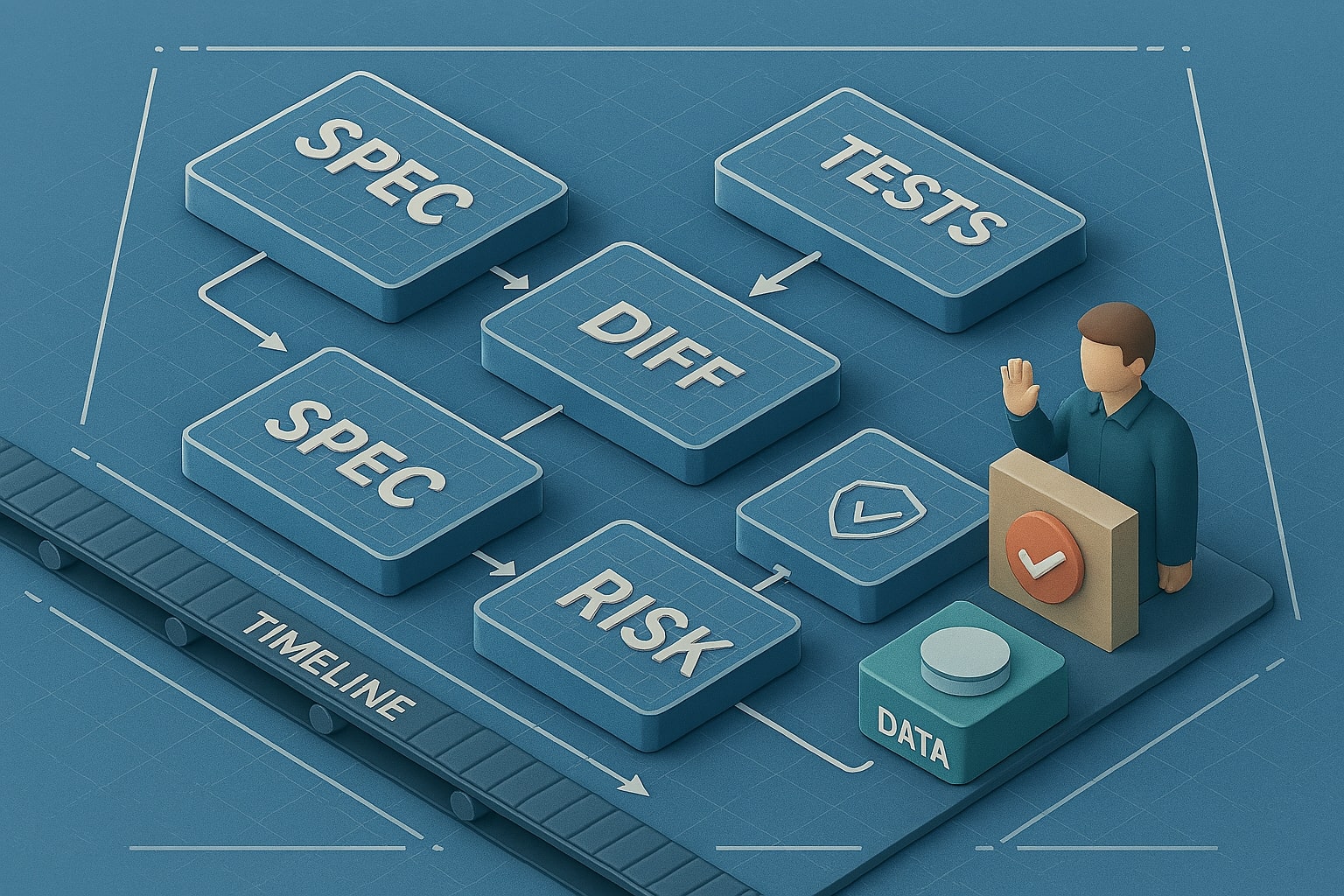
Patterns make outputs auditable. I keep these six at hand and adapt them to each task.
- Spec‑First Pattern: State scope, inputs, outputs, constraints, acceptance tests, and failure modes. Refuse scope creep.
- Tests‑First Pattern: Ask for failing tests before implementation and require an explanation for each assertion.
- Diff‑Only Pattern: Return git diffs for changed files only plus a clear commit message.
- Risk Register Pattern: List security/licensing risks (secrets exposure, unsafe deserialization, GPL). Tie each risk to a mitigation or a documented “won’t fix.”
- Observability Pattern: Emit structured logs, metrics, and traces; include a runbook and SLO implications.
- Data‑Boundary Pattern: Label PII flows, retention defaults, and redaction strategy with a brief DPA note.
Prompt — Risk register + commit message
For this diff [paste], produce a risk register table (risk, impact, likelihood, mitigation, owner) and a commit message with rationale, rollback plan, and links to docs (plain text).
Example — Commit template (copy/paste)
feat(api): add typed client with retries

Rationale: align with API timeouts and flaky 5xx behavior.
Rollback: revert #123 or disable via FEATURE_RETRY_CLIENT.
Risks: transient retry storms; mitigation: jitter + cap; SLO unchanged.
Docs: /docs/api-client.md
Evaluation Workflow to Sanity‑Check AI‑Generated Code

Because enthusiasm often outpaces reliability, I treat AI output like a junior colleague’s PR. I read the diff, run tests, scan for vulns, and simulate failure.
Prompt — Make me your toughest reviewer
Review this diff [paste] like a staff engineer: (1) what is the simplest alternative, (2) what will break in prod, (3) what test is missing, (4) what docstring would help future maintainers. End with a go/no‑go.
Example — Micro‑benchmark harness (Node)
import { bench, run } from 'mitata';
import { parseFast, parseSafe } from './parse';

bench('parseFast', () => parseFast('2025-08-17T00:00:00Z'));
bench('parseSafe', () => parseSafe('2025-08-17T00:00:00Z'));

run({ avg: true, silent: false });
Copy‑Ready Prompt Library (Grab, Paste, Ship)
Each fits into IDE chat, returns diffs/tests, and assumes you’ll review like production code.
- Full‑stack bug fix
Create a minimal repro for [bug]. Rank hypotheses; propose one targeted fix; generate a failing test first; return git diff only; add a commit message with risks and rollback.
- API integration
From OpenAPI [paste], generate a typed client with retries/backoff and timeouts. Include contract tests and a short runbook for 429/5xx.
- Form & accessibility
Build a form with ARIA labels and inline validation for [fields]. Provide unit tests and an accessibility checklist. Return diffs only.
- Data pipeline step (Python)
Write a Pydantic‑validated step that logs metrics and writes to S3 with exponential backoff. Provide
--dry-runand unit tests. Include a Makefile target.
- CI/CD hardening
Extend our pipeline to add lint, test, coverage ≥85%, SAST placeholder, and environment‑specific secrets. Require approval for prod. Output: single YAML + rationale.
- Docker hardening
Convert this Dockerfile to multi‑stage; run as non‑root; distroless final image; add healthcheck; explain trade‑offs; include Trivy instructions.
A final note before you ship
I wrote this so you can move faster and safer—use prompts that ship features, surface root causes, and automate pipelines without creating brittle systems. If you have a smarter template or found a hole in one of mine, please share it in the comments or ask a follow‑up question; the more real‑world cases we collect, the stronger this playbook becomes.
References
- Stack Overflow Developer Survey 2025 — AI section
- Stanford HAI — AI Index 2025 (Economy & adoption)
- McKinsey (2025) — AI in the workplace report
- ZoomInfo (2025) — Experience with GitHub Copilot for Developer Productivity
- Temporal — State of Development report coverage (2025)
Ready to apply this to your business?
Let's Talk Strategy →